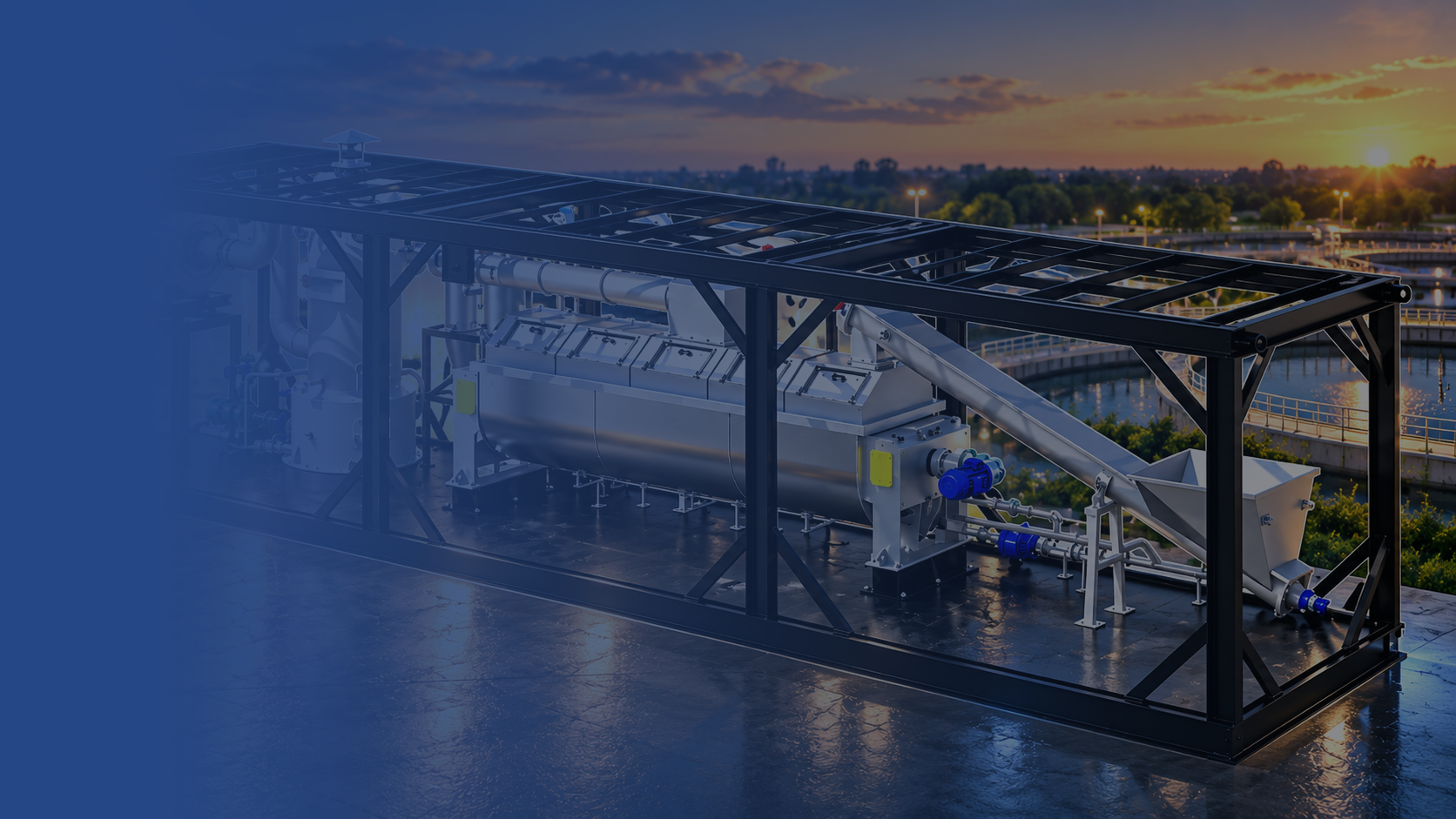
Seven Stages of Sewage Sludge Treatment

1. Sludge Collection
Receive residual sludge from the wastewater treatment plant. Dewatered sludge from primary and secondary treatment processes is collected and prepared for thermal processing. The material is inspected and metered to ensure consistent feed quality.

2. Drying
Remove moisture to improve thermal processing efficiency. The collected sludge is dried to significantly reduce its moisture content. Drying improves energy efficiency, increases process stability, and enables effective treatment in the high-temperature plasma system.

3. Plasma Treatment
Expose dried material to high temperatures, reported above 1,600°C. This extreme heat breaks down organic compounds, destroys pathogens, and converts the material into a stable gas and molten inorganic phase.

4. Gasification
Thermally break down organic material and generate synthesis gas. It produces a synthesis gas (syngas) comprised primarily of hydrogen, carbon monoxide and other gaseous compounds that can be treated or potentially utilized.

5. Vitrification
Melt inorganic components into a glass-like solid. The inorganic portion of the sludge is melted and vitrified, forming a stable, glass-like solid. Vitrification helps immobilize heavy metals and other contaminants, resulting in an inert material with significantly reduced volume.

6. Gas Treatment
Cool, filter, scrub, and monitor process gases and emissions. The generated gases are cooled and cleaned through a multi-stage system including filtration, scrubbing and continuous monitoring to ensure compliance with environmental standards and minimize emissions to the atmosphere.

7. Final Management
Test vitrified material for permitted disposal or potential reuse. It can be sent for permitted disposal or potentially reused in applications such as construction aggregates, subject to local regulations.


About us
What problem it solves
Transforming Wastewater Sludge Into a More Sustainable Future. Advanced Thermal Plasma Technology for Wastewater Sludge Treatment Wastewater treatment facilities face growing challenges in managing sewage sludge. Traditional disposal methods are costly, heavily regulated, and increasingly difficult to sustain.Wastech Brasil offers an innovative approach to sludge management through advanced thermal plasma gasification and vitrification technology. Our technology is designed to dramatically reduce sludge volume, transform residual materials into more stable solid products, and minimize reliance on conventional disposal methods. By combining high-temperature treatment with integrated gas-cleaning systems, Wastech provides a potential pathway toward more efficient and environmentally responsible sludge management.
Learn More
Our Goal
![]()
![]()
Designed for Wastewater Infrastructure
For municipalities, wastewater utilities, environmental engineering firms, and project developers exploring alternatives to conventional sludge management.
Why CDK Engineering
-
CDK Engineering

-
1 Future Certifications
More than 35 years of precision manufacturing experience with a reputation for quality and integrity.
-
2 Fortune 100‑level Expertise
Leadership team brings best practices from major corporations such as Amphenol, Lockheed Martin and American Airlines.
-
3 Agile & Responsive
Rapid quoting, prototyping and transparent communication keep your project moving.
-
4 Flexible Capacity
Small enough to provide personal service, big enough to deliver complex programs using local and global supply chains
-
5 Future‑Facing
Continuous investment in people, equipment and quality systems positions CDK Engineering for your long‑term needs.
High quality For more than three decades •
High quality For more than three decades •
Significant Mass Reduction in Experimental Testing
A 2016 technical report describes an experimental reduction
from 35 kg of sludge to 1.8 kg of vitrified material.
94.9% APPROXIMATE MASS REDUCTION IN ONE REPORTED EXPERIMENT.
This reported experimental result is not a guarantee of commercial performance. Actual results depend on sludge composition, moisture content, process design, energy input, and operating conditions. Mass reduction is not equivalent to a verified volume-reduction rate.